|
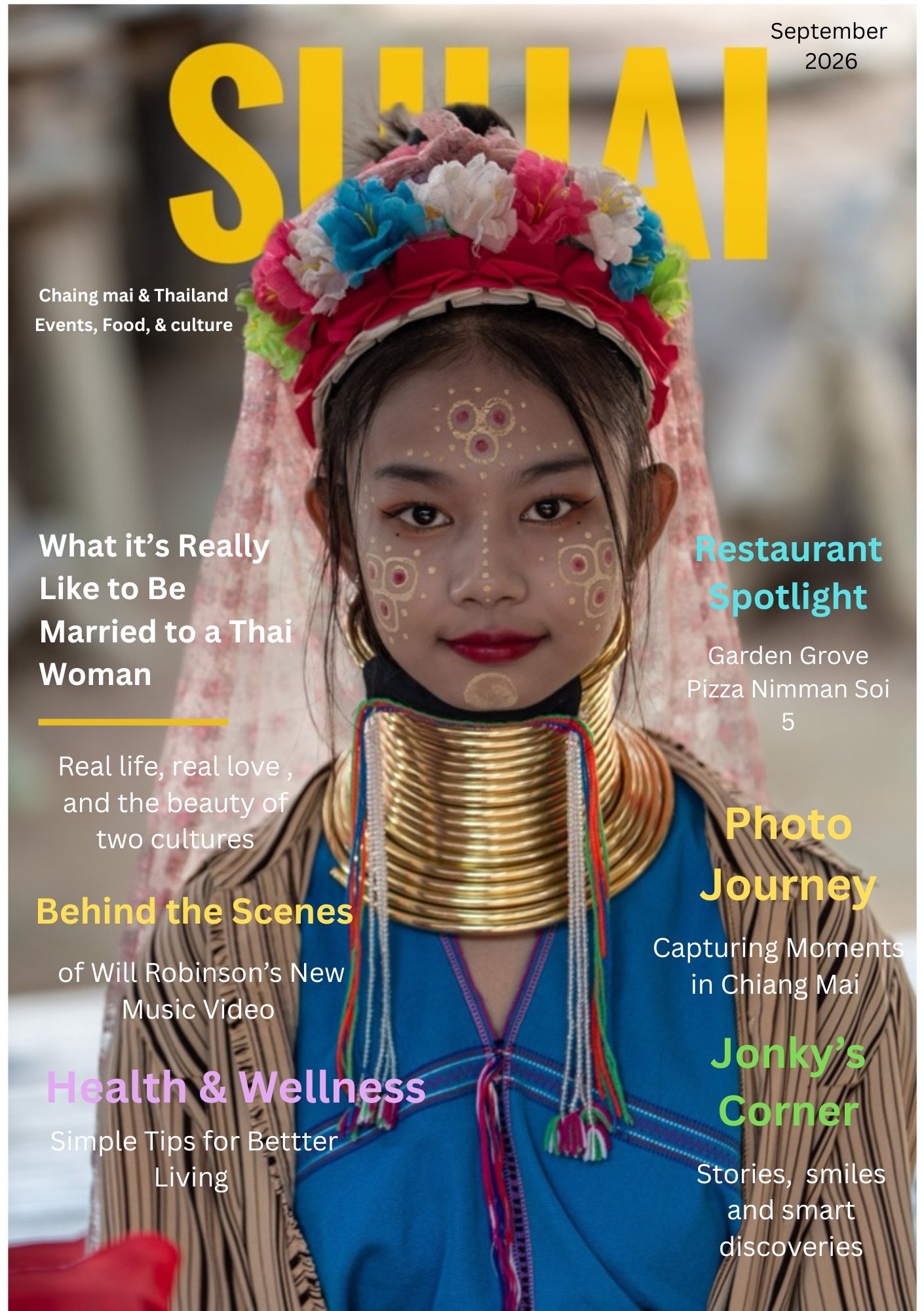
What It’s Really Like Being Married to a Thai Woman
Marriage is about learning another person, but when you marry across cultures, you’re learning a whole new way of life too.
Phew… I didn’t know that. And I definitely didn’t know that either.
Here’s a peek inside what happens when two people, and two cultures join together.
Rule #1: Never Hand Her the Menu
If you give a Thai woman the menu, don’t be surprised when half of it ends up on the table.
It’s not indulgence, it’s generosity.
She’s not simply ordering for herself; she’s creating an experience for both of you. In Thai culture, food is meant to be shared, and variety is part of the pleasure. One dish is never enough when five dishes give everyone something to enjoy.
I learned fairly quickly that ordering dinner isn’t necessarily about choosing your meal. It’s about building our table.
Rule #2: Get Used to Showering… Often
A Thai woman expects, no, requires, you to be clean before getting into bed.
With Thailand’s heat and humidity, it makes perfect sense. But it goes beyond comfort. A clean body, clean clothes, and a clean bed are part of maintaining a pleasant home.
So if you’ve been outside sweating all afternoon and think you’re climbing straight into bed…
Think again.
The shower is that way.
Rule #3: Respect Is Everything
One of the biggest things I’ve learned is that tone can matter as much as the words themselves.
Harsh or disrespectful language may not lead to the argument you’re expecting. Instead, you might get silence, distance, and a cold shoulder that leaves you wondering exactly where things went wrong.
I’ve found patience, calmness, and respect go much further.
Even something as simple as using polite Thai language, such as ending a sentence with "krup" for a male speaker, changes the tone. It signals courtesy and respect.
And respect carries enormous weight.
Rule #4: Family Is Not Optional
You didn’t just marry her.
You married the family.
Parents, siblings, cousins, nieces, nephews, and sometimes enough relatives to make you wonder if half the village is somehow connected.
Family occupies an important place in Thai life. Showing respect to her family can be every bit as important as how you treat her.
Being present matters. Helping when appropriate matters. Sharing meals matters.
You begin to understand that marriage isn’t simply two people joining together. In many ways, two families are joining together too.
Rule #5: There’s No Debate, There’s a Choice
You’ll state your side.
She’ll state hers.
And sometimes, that’s pretty much the end of the debate.
There may not be a long Western-style back-and-forth where everyone presents evidence, rebuts the opposing argument, and declares a winner.
Instead, you have a choice.
You can take the path that keeps the peace, or choose the other path and discover later why the first one might have been preferable.
I’ve learned that the smartest move isn’t always proving a point.
Sometimes it’s knowing which points aren’t worth proving.
Rule #6: Don’t Expect Direct Confrontation
Problems aren’t always spelled out clearly.
Instead of a direct argument, you may notice silence, a change in mood, or that unmistakable feeling that something in the room has shifted by about ten degrees.
This is where awareness comes in.
Read the room. Pay attention to the subtle signals. And rather than pushing for an immediate confrontation, approach things calmly.
Sometimes what isn’t being said is the most important part of the conversation.
Rule #7: Saving Face Matters
Embarrassing your partner, especially in front of other people, is something best avoided.
A correction or criticism that might seem insignificant to you can feel very different when delivered publicly.
I’ve learned that disagreements belong between the two people having them.
Protect each other’s dignity in public. Work out the differences in private.
That little bit of consideration can prevent a very little issue from becoming a very big one.
Rule #8: Small Gestures Matter More Than Big Words
You don’t always need a grand speech or some enormous romantic production.
Bring home her favorite snack.
Remember something she mentioned three days ago.
Notice something she did around the house.
Take care of a small problem before she has to ask.
Those little gestures can carry far more weight than a dramatic declaration.
Thoughtfulness is its own language.
Rule #9: “Up to You” Doesn’t Always Mean Up to You
Ah yes, the famous:
"Up to you".
Newcomers may hear this and think they’ve just been handed complete decision-making authority.
Proceed carefully.
Sometimes “up to you” genuinely means exactly that.
Other times, it means: I’m going to let you make this decision, and I’m also going to be very interested in what decision you make.
It’s not necessarily a trap.
Think of it as an awareness test.
Choose thoughtfully.
Rule #10: Harmony Beats Winning
Being right isn’t always the goal.
Keeping harmony can be more important than winning an argument.
If you push too hard simply to prove that your position is correct, you may win the point and lose something far more valuable in the process.
I’ve found that calmness, respect, and a little willingness to bend usually get you much further.
Besides, after enough years of marriage, most men eventually discover an ancient universal truth:
Not every hill needs to be climbed.
Rule #11: The House Becomes Her Stage
At some point, you notice something has shifted.
It’s no longer your house.
It’s her house.
And I don’t mean that negatively.
The home becomes her stage, the place where she takes pride in making people comfortable, preparing food, arranging things, and making sure guests are taken care of.
When someone visits, you may suddenly find yourself demoted from homeowner to assistant.
“Bring this.”
“Move that.”
“Get some ice.”
And you know what?
It works.
The house becomes more than a building. It becomes a place of hospitality, and she takes pride in being the person who makes everyone feel welcome.
Rule #12: Jealousy Can Be Remarkably Efficient
When it comes to other women, or even the slightest hint of a potential threat, I’ve discovered the message doesn’t necessarily require confrontation.
Sometimes it’s handled with remarkable subtlety.
Case in point:
We’re riding up an escalator while, coming down in the opposite direction, is a strikingly attractive woman.
At precisely the right moment, my wife turns to me and says:
“Could you hold my bag for me, please?”
That’s it.
No drama.
No accusation.
No tension.
Just a bag suddenly requiring my complete and immediate attention.
Message received, firm, composed, and unmistakably clear.
And I’m holding the bag.
Rule #13: “I Can Do It”
There’s another phrase I hear regularly:
“I can do it.”
It’s said casually, almost instinctively, but over time I realized there’s something more behind it.
It’s independence.
She doesn’t want to be viewed as helpless or as someone waiting for her husband to handle everything.
She contributes. She works. She solves problems. She carries her share of the household, and sometimes considerably more.
“I can do it” isn’t about pushing me away.
It’s about standing beside me.
There’s pride in those four words, along with independence, confidence, and a quiet kind of strength.
The Bottom Line
Being married to a Thai woman hasn’t been about memorizing a list of rules.
It’s been about learning a different rhythm.
Sharing instead of individual portions. Respect instead of confrontation. Family instead of just the two of us. Small gestures instead of grand speeches. Harmony instead of needing to win every disagreement.
And somewhere along the way, you stop thinking about which parts are “Thai” and which parts are “Western.”
They simply become your marriage.
You learn each other. You adapt. You laugh at the differences. Occasionally you completely misunderstand one another. Then you figure it out and move on.
And if there’s one thing I’ve learned, it’s this:
When she says “up to you,” think carefully.
And if she suddenly asks you to hold her bag on an escalator…
Just hold the bag.
|